


The content creation landscape has undergone a seismic shift. What once required teams of writers, designers, and editors working for weeks can now be accomplished in hours—sometimes minutes. This transformation isn’t just changing how we create content; it’s redefining what’s possible in digital marketing, journalism, entertainment, and beyond.
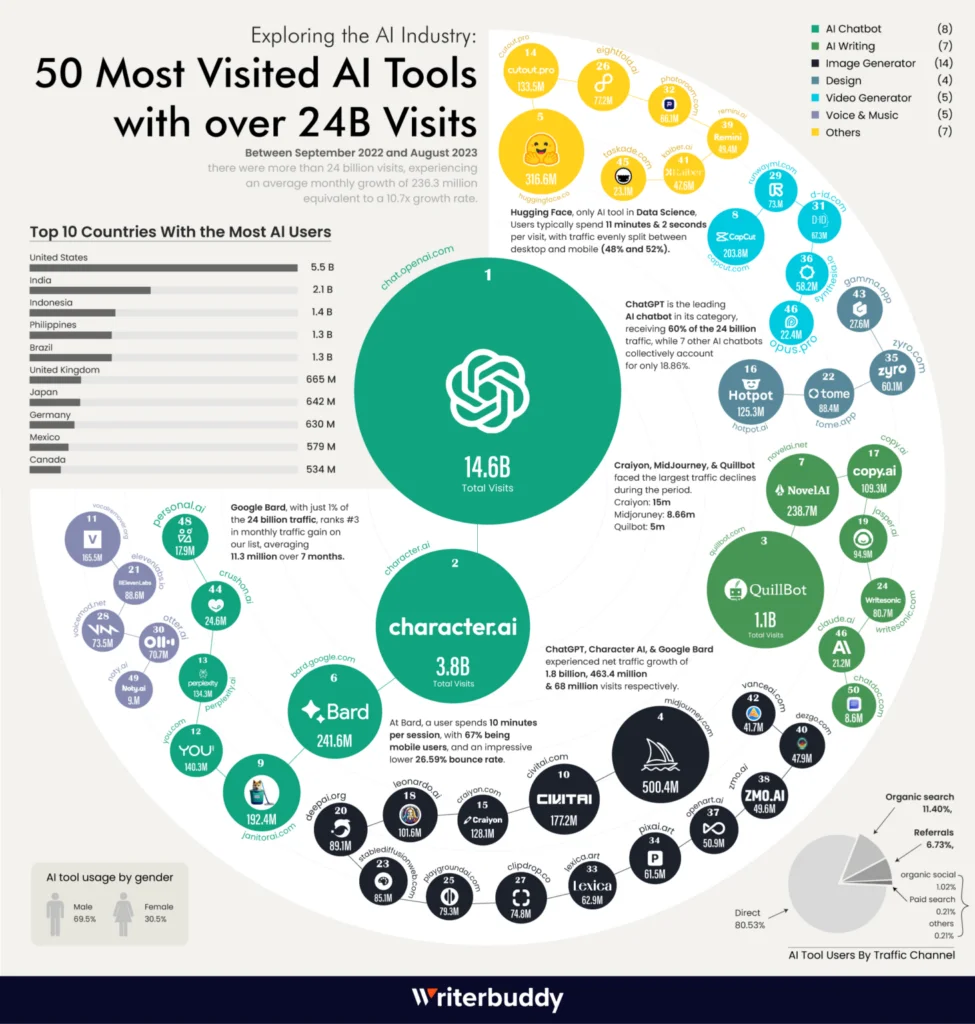
With 95.3% of enterprises either adopting or planning to adopt generative AI for content creation, we’re witnessing the most significant evolution in content production since the internet itself. From ChatGPT generating blog posts to DALL-E creating stunning visuals, artificial intelligence is not replacing human creativity—it’s amplifying it exponentially.
The Current State of Generative AI in Content Creation
Market Adoption and Growth
The numbers tell a compelling story. 52% of marketers are already using AI for content creation
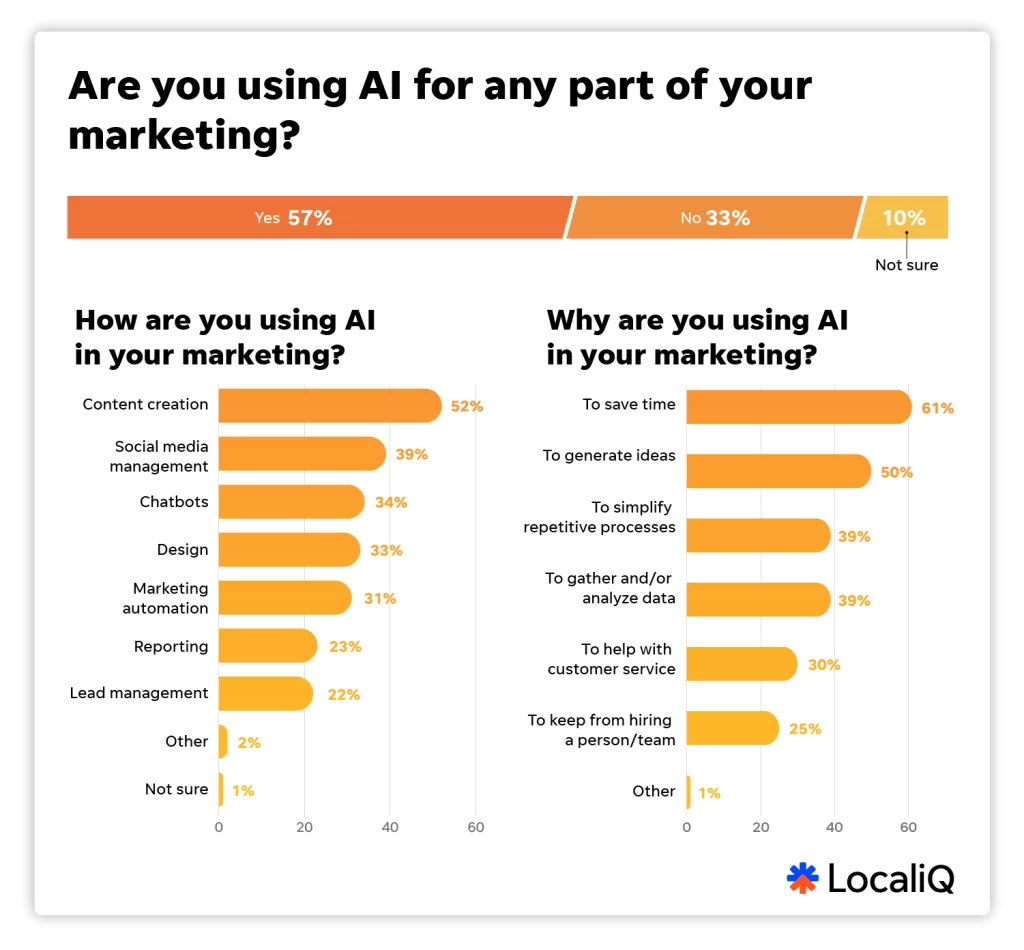
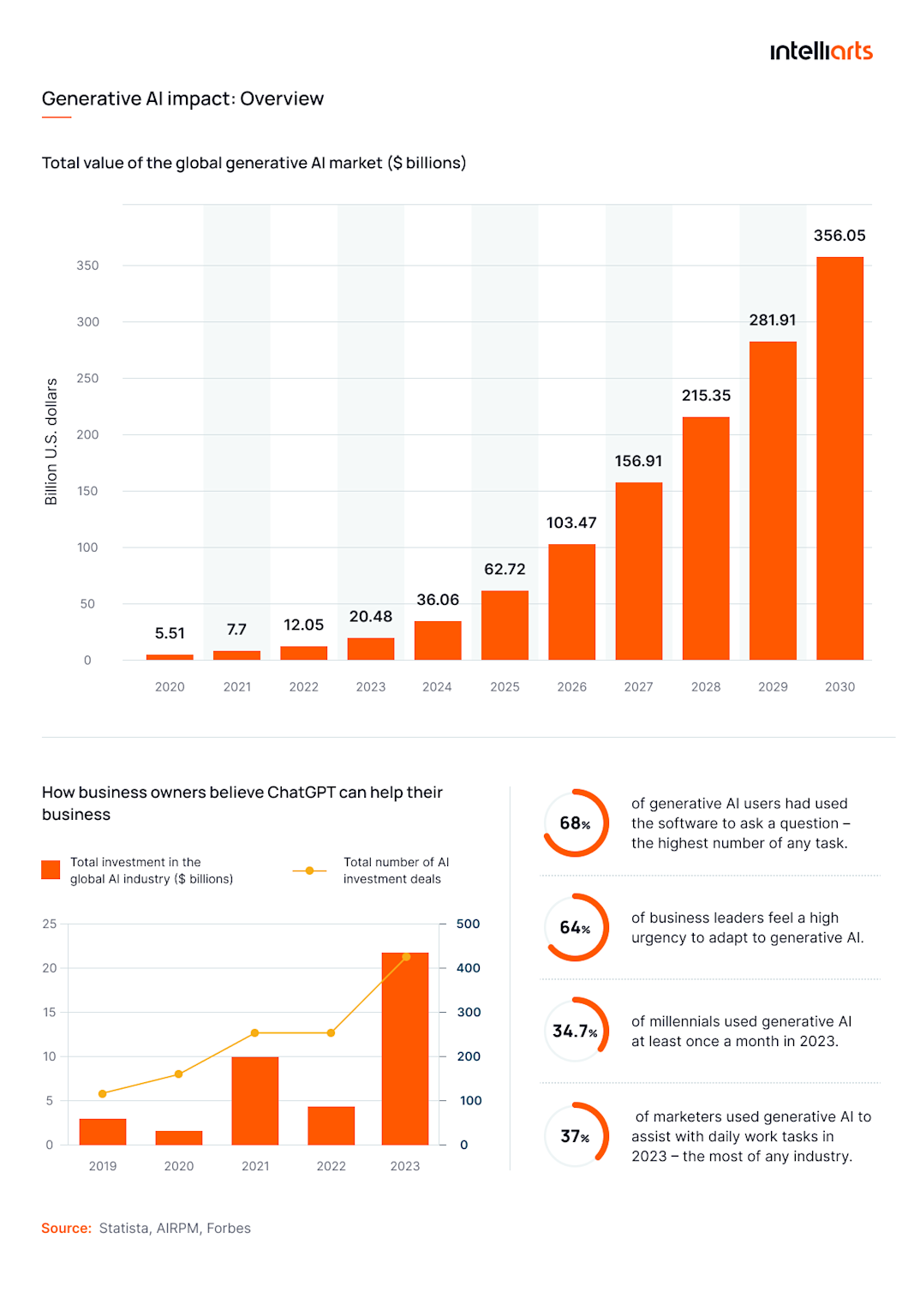
This isn’t just hype; it’s a fundamental shift in how businesses approach content strategy. 73% of marketers now leverage AI daily, and 64% of business leaders feel an urgent need to adapt to generative AI technologies. The message is clear: organizations that don’t embrace AI-powered content creation risk being left behind.
Leading AI Content Creation Tools
The generative AI ecosystem has matured rapidly, offering specialized tools for every content creation need:
Text Generation Powerhouses:
-
ChatGPT/GPT-4: Excels in natural language understanding and conversational content
-
Copy.ai: Focuses on marketing copy and SEO-optimized content
-
Jasper: Emphasizes brand voice consistency for enterprise-scale content
Visual Content Revolution:
-
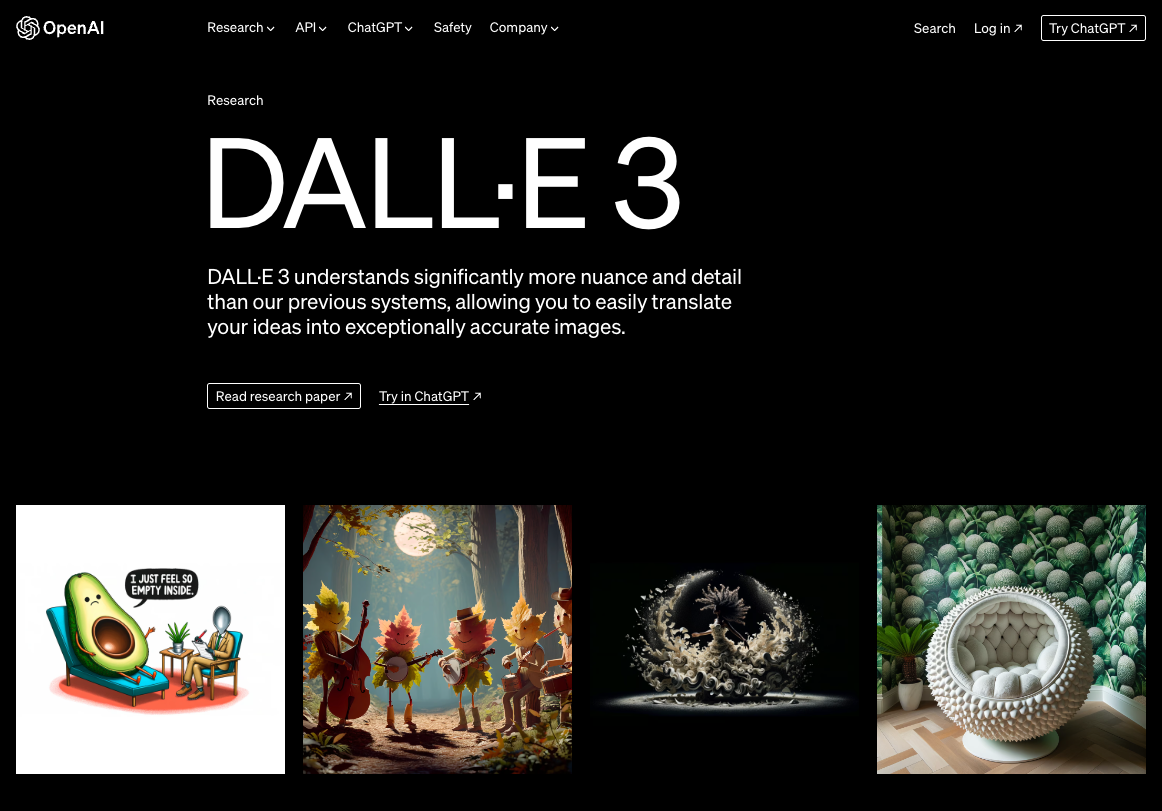
DALL-E 3: Offers superior prompt accuracy and seamless ChatGPT integration
-
Midjourney: Delivers artistic quality with extensive customization options
-
Stable Diffusion: Provides open-source flexibility for creative professionals
Video Content Innovation:
-
Runway ML: Comprehensive AI video editing and generation suite
-
Sora: Creates long-form, cinematic videos from simple text prompts
-
Synthesia: Generates professional videos with AI avatars in 140+ languages
Revolutionary Applications Across Industries
Marketing and Advertising
Generative AI has transformed marketing workflows in unprecedented ways. Brands can now create personalized product descriptions, social media content, and ad campaigns at scale. The Associated Press has utilized AI automation for years to convert financial data into news updates, minimizing transcription errors while freeing journalists to focus on deeper investigative work.
Key applications include:
-
Campaign Generation: AI creates complete marketing campaigns from a single prompt, including emails, social posts, and banner ads
-
Hyper-Personalization: 40% more value is captured by companies using AI-powered personalization
-
Content Localization: Instant translation and cultural adaptation for global audiences
Journalism and Media
The media industry has embraced AI for routine content generation while maintaining human oversight for complex reporting. AI-powered fact-checking tools help news organizations verify images and claims faster, with organizations like FullFact in the UK implementing AI to speed up verification processes.
However, this adoption comes with responsibility. CNET’s experience with AI-generated financial articles—where 41 out of 77 articles required corrections—highlights the critical need for human editorial oversight.
E-commerce and Product Content
E-commerce platforms leverage generative AI to create dynamic product descriptions, personalized shopping experiences, and virtual try-on features. This capability enables businesses to generate unique product pages with specifically designed images and copy for individual users, revolutionizing how consumers interact with online retail.
Educational Content Creation
Educational institutions and EdTech companies are using AI-powered tutors, automated content creation, and personalized learning experiences. AI can generate interactive lessons targeting specific learning styles, making education more accessible and engaging for diverse student populations.
Key Benefits of AI-Powered Content Creation
Speed and Efficiency
The most immediate advantage is dramatic time reduction. Content that traditionally took hours or days can now be produced in minutes:
-
Blog post creation: From 4-6 hours to 1-2 hours (50-70% time savings)
-
Social media content: From 2-3 hours to 15-30 minutes (80-90% time savings)
-
Visual content generation: From 2-4 hours to 15-45 minutes (80-90% time savings)
-
SEO optimization: From 1-2 hours to 15-30 minutes (75-85% time savings)
Scalability Without Compromise
AI enables unlimited content variations without proportional resource increases. A single product can have hundreds of different descriptions tailored to various customer segments, geographic regions, or marketing channels—something impossible with traditional content creation methods.
Enhanced Creativity and Ideation
Rather than replacing creativity, AI amplifies human creative potential. Tools like GPT-4 can generate hundreds of blog post ideas in seconds, while image generators create visual concepts that inspire new directions for creative projects.
Cost-Effective Content Production
Organizations report 40-70% reduction in content creation costs when implementing AI tools effectively. This cost efficiency enables smaller businesses to compete with larger enterprises in content volume and quality.
Improved SEO Performance
AI-powered content optimization tools analyze keywords, readability, and search intent automatically, ensuring content meets SEO best practices without manual optimization work. Some businesses have seen 40% increases in organic traffic within three months of implementing AI content strategies.
Challenges and Limitations
Quality and Authenticity Concerns
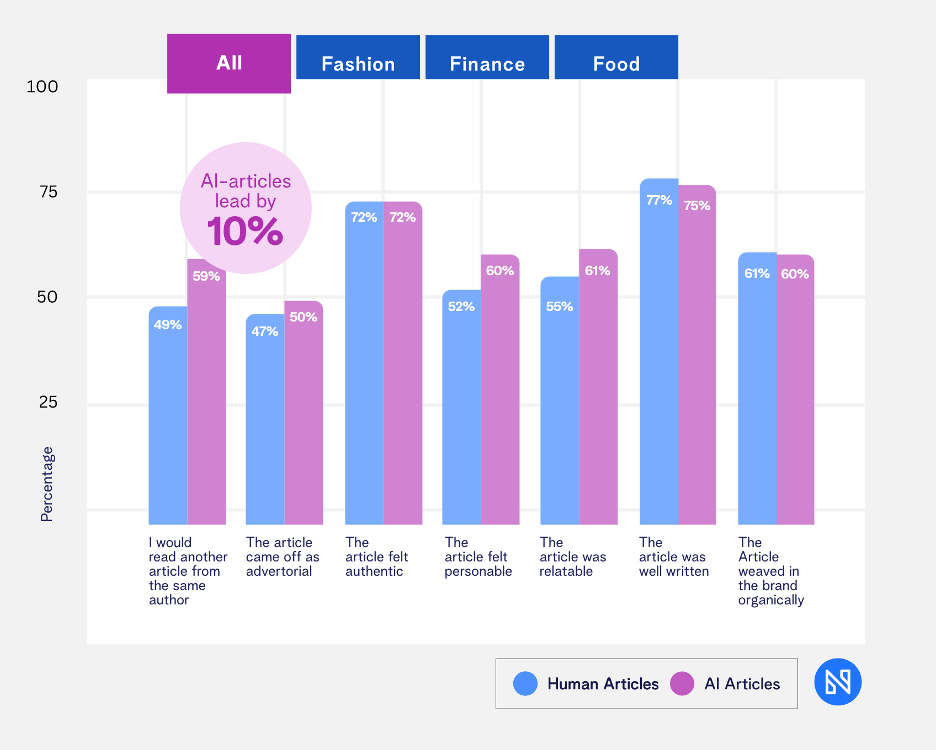
Despite impressive capabilities, AI-generated content faces significant challenges:
Accuracy Issues: AI systems can produce factual errors, misleading interpretations, or fabricated information. The risk of “hallucinations”—where AI confidently states false information—remains a critical concern for content creators.
Lack of Emotional Intelligence: AI tools lack true emotional intelligence, which is crucial for content that resonates with human emotions and experiences. While AI can mimic emotional expressions, it doesn’t genuinely understand or feel them.
Creativity Limitations: Content produced by AI often follows predefined templates, making it formulaic and lacking in originality. The “mass-produced nature of AI content can lead to homogenization,” where everything starts to sound similar.
Ethical and Legal Considerations
Bias Amplification: AI systems trained on biased datasets can inadvertently reproduce and amplify those biases. This is particularly problematic in sensitive topics like healthcare, finance, or politics.
Copyright and Plagiarism: AI models use existing content for training, raising questions about copyright infringement and plagiarism. The challenge lies in determining when AI rewrites constitute original work versus copying.
Transparency Requirements: Many readers remain unaware that AI generates content, creating concerns about transparency and accountability in journalism. News organizations must clearly label AI-generated content to maintain trust.
Technical and Operational Challenges
Data Quality Dependence: The quality of AI-generated content is only as good as the training data. Biased or poor-quality training data leads to subpar outputs.
Integration Complexity: Implementing AI tools requires robust content review processes and human oversight systems, which can be complex and resource-intensive to establish.
Scalability vs. Quality Balance: While AI excels at generating content at scale, this often comes at the cost of quality or uniqueness.
Future Outlook and Emerging Trends
Multimodal AI Integration
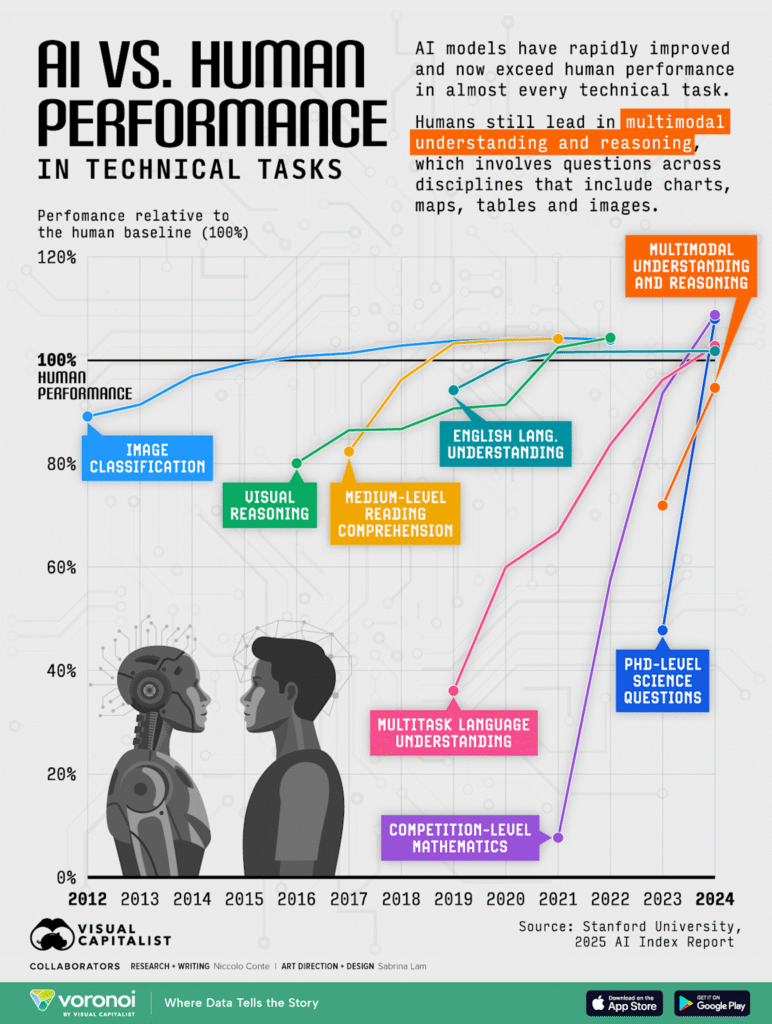
The future of generative AI lies in multimodal systems that process and generate text, images, video, and audio simultaneously. By 2025-2026, we’ll see AI tools that can write a script, generate accompanying visuals, and compose a soundtrack from a single prompt.
Hyper-Personalization at Scale
AI will enable individual content customization for each user in real-time. E-commerce platforms will generate unique product descriptions, images, and even virtual try-on experiences for every visitor, while healthcare AI develops personalized treatment plans based on individual patient data.
The Rise of Generative Engine Optimization (GEO)
As traditional search volume drops 25% by 2026 due to AI chatbot adoption, a new discipline is emerging: Generative Engine Optimization (GEO). Instead of optimizing for Google’s algorithm, content creators will optimize for AI systems that synthesize information for conversational responses.
Real-Time Content Generation
Edge computing and 5G/6G networks are enabling real-time AI applications, from instant language translation in video calls to on-the-fly content creation for live events. Gaming environments will generate dynamic worlds as players explore, while customer service AI crafts human-like responses in milliseconds.
Domain-Specific AI Models
The development of specialized generative models tailored for specific industries will deliver more accurate, contextually appropriate content. Healthcare AI will understand medical terminology and protocols, while legal AI will generate documents that comply with regulatory requirements.
Enhanced Human-AI Collaboration
The future isn’t about AI replacing humans—it’s about intelligent collaboration where AI handles production while humans provide strategy and creativity. 80% of creative talent will use generative AI daily by 2026, but companies will actually increase spending on creative professionals to leverage these tools effectively.
Best Practices for Implementation
Establishing AI Content Governance
Successful AI content implementation requires robust governance frameworks:
-
Content Quality Standards: Establish clear guidelines for AI-generated content quality and brand voice consistency
-
Human Oversight Protocols: Implement review processes where humans validate AI outputs before publication
-
Bias Detection Systems: Regular audits to identify and correct potential biases in AI-generated content
-
Transparency Policies: Clear labeling of AI-generated content to maintain audience trust
Choosing the Right Tools
Tool selection should align with specific content needs:
-
For blog content: ChatGPT/GPT-4 with human editing
-
For marketing copy: Copy.ai or Jasper with brand voice training
-
For visual content: DALL-E 3 for quick iterations, Midjourney for high-quality creative work
-
For video content: Runway ML for professional editing, Synthesia for scalable video production
Integration Strategies
Successful integration follows a phased approach:
-
Pilot Phase: Start with low-risk content types like social media posts or product descriptions
-
Scale Phase: Expand to blog posts, email campaigns, and marketing materials
-
Optimization Phase: Refine prompts, establish quality benchmarks, and automate workflows
-
Innovation Phase: Explore advanced applications like personalized content and multimedia creation
Measuring Success and ROI
Key Performance Indicators
Track these metrics to measure AI content effectiveness:
-
Content Production Speed: Time reduction across different content types
-
Cost Per Piece: Overall reduction in content creation costs
-
Engagement Metrics: Click-through rates, time on page, social shares
-
SEO Performance: Organic traffic growth, keyword rankings, search visibility
-
Brand Consistency: Adherence to brand voice and messaging guidelines
Return on Investment
Organizations implementing AI content creation report:
-
50-90% reduction in content creation time across various content types
-
40-70% decrease in content production costs
-
40% average increase in organic traffic within three months
-
300-500% increase in content output volume without proportional resource increases
Conclusion: Embracing the AI Content Revolution
Generative AI is not just changing content creation—it’s fundamentally reshaping how we communicate, market, and share information. The statistics are overwhelming: 95.3% of enterprises are adopting AI content tools, 73% of marketers use AI daily, and the market is projected to grow from $5.51 billion to $356.05 billion by 2030.
The organizations succeeding in this transformation understand a crucial principle: AI is not replacing human creativity; it’s amplifying it. The most effective content strategies combine AI’s speed and scale with human insight, creativity, and emotional intelligence.
As we move toward 2026, the landscape will continue evolving. Multimodal AI will create comprehensive content experiences, hyper-personalization will become the standard, and new optimization strategies like GEO will emerge. The question isn’t whether to adopt AI content creation—it’s how quickly you can implement it effectively.
The future belongs to organizations that embrace this technology thoughtfully, establishing proper governance, maintaining quality standards, and preserving the human elements that make content truly compelling. In the age of AI-powered content creation, the most successful brands will be those that seamlessly blend artificial intelligence with authentic human insight.
The revolution is here. The question is: will you lead it or follow it?
Ready to transform your content strategy with AI? Explore the latest generative AI tools and discover how ThinkStratum can help you implement AI-powered content creation that drives results. Visit ThinkStratum to learn more about our AI agent development and content automation services.
