

Introduction
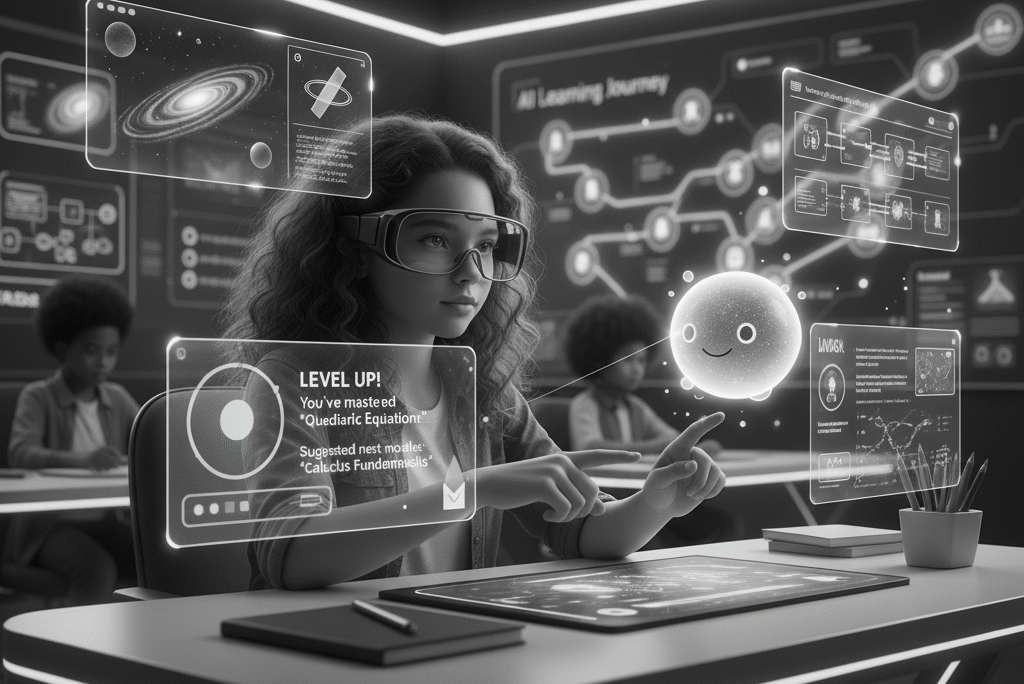
Artificial intelligence is reshaping education by making it more inclusive and effective, particularly through personalized learning and adaptive systems. These technologies tailor content to individual needs, allowing students to learn at their own pace while providing educators with valuable insights. In 2025, AI integration in classrooms is projected to enhance engagement and outcomes, with partnerships like Perplexity and Wiley enabling access to vast resources for customized experiences.
Personalized Learning Explained
Personalized learning uses AI to adapt educational content based on a student’s strengths, weaknesses, and preferences, moving away from one-size-fits-all models. By analyzing data from quizzes, interactions, and progress, AI creates unique learning paths that match individual styles—whether visual, auditory, or kinesthetic. This approach ensures no student falls behind or gets bored, fostering deeper comprehension and motivation.
For instance, AI platforms can generate study guides from textbooks or connect concepts to real-world examples, helping students grasp complex topics more easily. Educators benefit too, as these systems free up time for mentoring while providing data-driven recommendations for lesson adjustments.
Adaptive Systems in Action
Adaptive learning systems dynamically adjust difficulty and content in real-time, using machine learning to monitor performance and behavior. They model learner profiles, map content to skill gaps, and offer instant feedback through intelligent tutoring. Unlike static quizzes, these systems present easier tasks for struggling areas or advanced challenges for quick learners, creating a responsive educational flow.
A practical example is AI-powered quizzes that evolve based on responses, introducing supporting materials if a concept is unclear. In schools, tools like adaptive software track progress and suggest interventions, such as visual aids for geometry or audio explanations for history, tailoring to preferred styles.
Real-World Applications
Intelligent Tutoring
AI tutors provide 24/7 support, answering questions and simulating human interactions via natural language processing. In higher education, 57% of institutions prioritize AI for personalized tutoring, up from 49% the previous year, enabling virtual classrooms with speech recognition for language practice.
Automated Assessment
These systems grade assignments instantly and offer feedback, reducing administrative burdens and allowing teachers to focus on instruction. Platforms analyze performance trends to predict outcomes and recommend resources, improving retention in online courses.
Data-Driven Insights
AI analytics process educational data to identify engagement patterns, supporting curriculum design and equity efforts. For example, systems like those from Samsidh Schools use AI for CBSE learning, enhancing creativity and critical thinking through tailored paths.
Explore more AI education tools in our ThinkStratum AI blog for case studies and trends.
Key Benefits
Personalized AI learning boosts engagement by adapting to diverse needs, with studies showing improved outcomes in subjects like math and science. It promotes equity by supporting underrepresented students, such as through real-time translation or accessible content.
Educators gain efficiency from automated grading and analytics, saving time for personalized mentoring. Overall, AI makes education scalable and cost-effective, with market growth projected to enhance global access.
Challenges Faced
Data privacy remains a major concern, as AI systems handle sensitive student information requiring robust security. Algorithmic bias can exacerbate inequalities if training data lacks diversity, potentially disadvantaging certain groups.
Educators may face a learning curve in integrating AI, and over-reliance could reduce human interaction essential for social development. Addressing these through ethical guidelines and training is crucial for responsible adoption.
Future Outlook
By 2025, AI will further blend with VR/AR for immersive experiences and expand into lifelong learning platforms. Expect more focus on AI literacy, teaching students to evaluate tools critically alongside core subjects.
Institutions investing in adaptive systems will see higher achievement rates, with AI driving 20% market growth in edtech. Visit our ThinkStratum blog for updates on emerging AI education innovations.
Conclusion
AI in education via personalized learning and adaptive systems is creating equitable, engaging experiences that empower students and educators alike. As these technologies evolve, they promise to bridge gaps and prepare learners for a dynamic world, provided ethical implementation guides the way.
Subscribe to ThinkStratum for more insights on AI’s role in transforming industries.
