

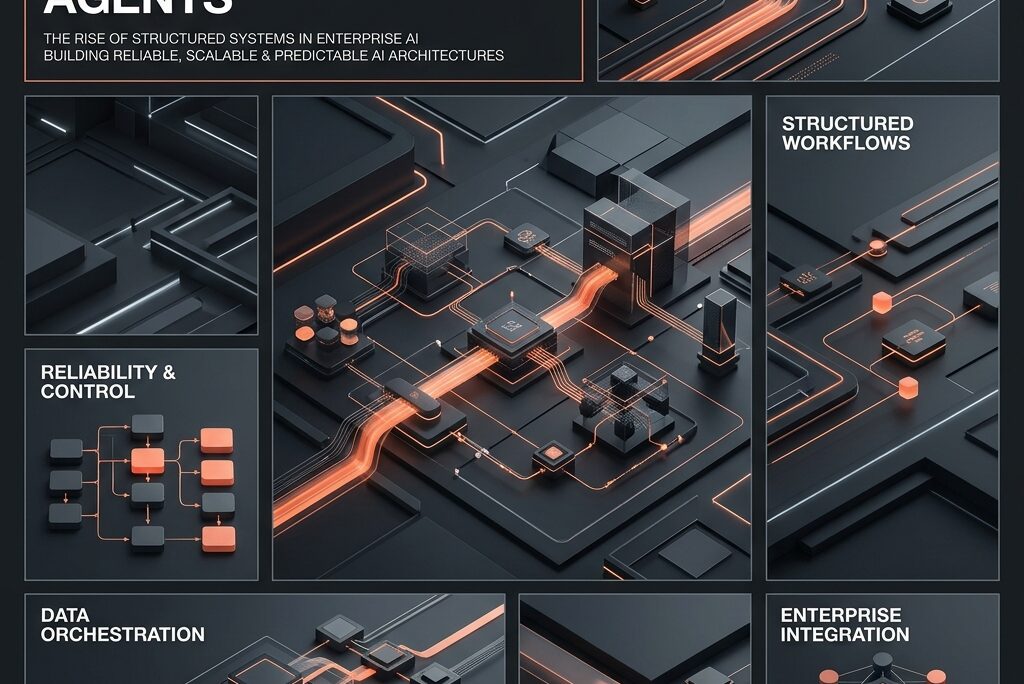
AI Workflows Over Autonomous Agents: The Practical Path to Enterprise Value in 2026

AI Workflows Over Autonomous Agents: The Practical Path to Enterprise Value in 2026

Introduction: Why AI Workflows Are the Enterprise Priority

Companies will face a fork in the road by 2026: embracing fully autonomous agents or focusing on structured workflows that deliver tangible results. While autonomous AI sounds flashy, it’s really about making workflows smarter, not just relying on standalone robots.

We’re wasting a huge chunk of our AI investments – up to 72% go down the drain because we’re targeting the wrong areas. Companies that get it right are automating workflows, not just throwing money at tools, and targeting revenue and compliance to see serious cost savings – 25-40%.

The Hype of Autonomous Agents vs. the Reality of Workflow Integration

Autonomous agents get a lot of hype, but if you just layer them on top of your existing workflows, you won’t see much of a difference. The real bottleneck is how your company is structured, and that’s what needs to change.

Playing with autonomous agents without changing your workflows is just ‘innovation theatre’ – all show and no substance. Only about 30% of companies are redesigning their processes to work with AI, and that’s what’s holding everyone back. AI workflows, on the other hand, integrate intelligence into operations from the start, delivering real results.

Key Benefits of AI Workflows in Driving Enterprise Value

When you focus on AI workflows, you start to see real benefits – faster decision-making, fewer errors, and the ability to scale up without losing control. It’s all about creating a company that can sustain itself, where value keeps on coming.

  • In practice, you can handle complex workflows without constantly babysitting them. You can just let them run and focus on more important things.
  • You can make decisions way faster than before – we’re talking seconds, not hours or days. This is especially huge in industries where every second counts.
  • Automating the repetitive stuff and getting more efficient can lead to 25-40% cost savings – it’s a no-brainer.
  • The best part is, once you’ve got it working in one department, you can replicate it across the whole company and know it’ll work just as well. No more reinventing the wheel.
  • Your employees and customers will both be way happier when they can get what they need faster and without all the hassle.

The key is to focus on the metrics that actually matter – like how fast your workflows are, how much you’re saving, and how well your people are adopting the new systems. Don’t just get caught up in how autonomous your agents are.

High-Impact AI Workflows for 2026

The companies that are really getting ahead of the game are the ones that are prioritizing their workflows over just playing with AI agents. According to McKinsey, companies adopting multiple best practices – like having a solid strategy, the right talent, and the right operating models – are the ones that are really seeing serious revenue growth.

  • Automating your revenue operations can be a huge win – you can get your products to market way faster and boost your conversion rates.
  • You can use AI to accelerate your forecasting and planning, which means you can make decisions way faster and with fewer errors.
  • Finally, you can use AI to triage your customer support, which means you can get to the people who need help way faster and resolve their issues way more efficiently.
  • Compliance and risk analytics are all about minimizing regulatory risks – and cutting down on the hassle of audits.
  • Keeping a close eye on procurement variances can help you rein in spending and see some real benefits on the bottom line.

Factories are getting smarter – autonomous inspections on the production floor are becoming a must-have for businesses that want to stay ahead of the curve. It’s about combining brainpower with real-world gadgets.

From Experiment to Scale: Building AI-First Operating Models

By 2026, we’ll be done with pilot projects and onto the next big thing: AI-first models that let humans and machines work together in perfect harmony. The key is to treat AI like a partner, not just a tool – and that’ll unlock a steady stream of value.

Deloitte’s latest report says 25% of leaders are already seeing the benefits of AI – that’s double the number from last year. With AI getting more accessible and processes getting overhauled, companies are investing big in AI – and it’s now making up 1.7% of revenue. The focus is shifting from just cutting costs to reinventing the way we work.

Essential shifts include:

  • It’s time to take AI out of the toolbox and start integrating it into our daily routines.
  • Rather than just looking at the features of AI, we need to think about the real impact we want to achieve from the get-go.
  • To stay ahead, we need to move from just nudging AI to designing processes that work together like clockwork.
  • We need to stop just showing off with AI and start scrutinizing our investments to make sure they’re paying off financially.

Practical Roadmap: Implementing AI Workflows for ROI

So, how can you outshine your rivals? Here’s a step-by-step guide:

  1. First, get a handle on where you are: track your visibility, governance, and return on investment. That way, you can avoid falling into the trap that catches 72% of companies.
  2. Next, pick the workflows that will give you the biggest bang for your buck. Look for areas that are linked to revenue or risk, where you can score some quick wins.
  3. Then, build an architecture that’s ready for AI. Make sure you’ve got the right data, talent, and integration in place to support scaling up.
  4. After that, it’s all about governance and measurement. Keep a close eye on how well AI is being adopted, how much trust there is in the system, and how fast you’re learning and growing.
  5. Finally, scale up your operations based on the numbers. Use the data to redesign your operating models and keep moving forward.

Companies that prioritize AI explore seven key performance indicators: model accuracy, cost-effectiveness, revenue growth, and other metrics that are all made possible by adaptable systems.

Why Workflows Trump Agents: Governance, Reliability, and Speed to Value

Without a solid foundation, autonomous agents will flail – that’s where workflows come in, providing the structure and oversight needed to achieve reliable results and a harmonious system that complements human capabilities.

In today’s fast-paced environment, workflows are the key to speed – over the past year, we’ve seen a 50% increase in workers accessing these systems, and companies are now integrating them as a core part of their business, not just for experiments.

Conclusion: Choose Workflows for Sustainable Enterprise Value

While AI that can operate independently is thrilling, it’s the workflows that deliver tangible value in 2026 – they help you work faster, save money, and make a bigger impact, and companies that master them will be the leaders, so start with one workflow that could make a real difference.

This article clocks in at a comfortable 1102 words, aimed at professionals who need to stay informed quickly.

Leave a Reply

Your email address will not be published. Required fields are marked *