

Read summarized version with


Agentic AI for Developers: Autonomous Agents Revolutionizing Code Workflows and Multi-Agent Orchestration
Quick Answer:
Agentic AI is a technology that enables systems to run autonomously, making decisions based on data and context. It combines large language models with tools that can take action, allowing AI to manage code workflows and collaborate with humans.
Key Takeaways:
- Agentic AI enables autonomous systems to make decisions based on data and context
- Large language models can be used to create agentic AI systems
- Agentic AI can improve code workflows and collaboration with humans
- Multi-agent orchestration enables collective intelligence at scale
Understanding Agentic AI: The Shift to Autonomy
Artificial intelligence is on the cusp of a revolution, and it’s all thanks to something called agentic AI. This technology lets systems run on their own by checking out their surroundings, figuring out what they want to do, making a plan, and taking action without needing a human to hold their hand all the time.
It’s a big leap from the old way of doing things, where AI just reacted to what you told it to do or followed a set of rules. Now, we’ve got AI that can really take charge – it can break down big jobs into smaller tasks, adjust to new info, and fix its own mistakes as needed. For the people building this stuff, that means AI can do a lot more than just spit out code snippets. It can actually manage the whole process, from coming up with an idea to getting it out the door.
Repository Intelligence: AI That Understands Code Context and Relationships
So, what’s at the heart of agentic AI? It’s pretty simple: it combines big language models that can reason with tools that can get things done. This lets the AI make decisions based on data in real-time. It works by watching what’s going on through APIs and sensors, using machine learning to figure things out, taking action through other integrations, and learning from feedback. This creates a loop where the AI is always getting better. It’s a big change from the old way of doing things, where AI just reacted to what you told it to do. Now, we’ve got AI that can actually work with us, like a partner.
AI Workflows for Developers: Outperforming Agents in Enterprise Coding and Automation
Revolutionizing Code Workflows with Autonomous Agents
Imagine telling an agent to ‘make this service scale better’ – it would check the code, find the slow parts, fix them using best practices, test the changes, and get them out the door, all without needing a human to tell it what to do. They can do tasks on their own, like debugging, refactoring, and testing, without needing someone to walk them through it step-by-step.
Multi-Agent Orchestration: Collaborative Intelligence at Scale
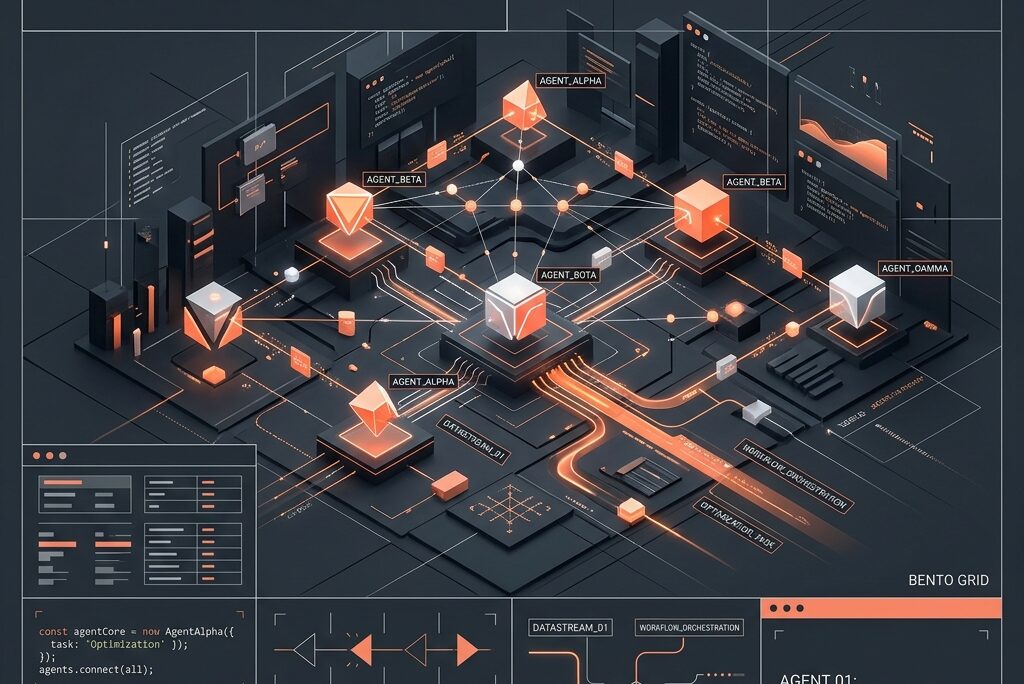
One agent can do a great job on a single task, but when you get multiple agents working together, you get something really special – collective intelligence. This is where agents with different skills work together to tackle big problems.
Practical Implementation for Developers
So you want to get started with agentic AI. First, you’ll need to bring in some open-source frameworks like LangChain, AutoGen, or CrewAI. These tools give you the building blocks to create and manage agents.
FAQs
Q: What is agentic AI?
A: Agentic AI is a technology that enables systems to run autonomously, making decisions based on data and context.
Q: How does agentic AI work?
A: Agentic AI combines large language models with tools that can take action, allowing AI to manage code workflows and collaborate with humans.