
Read summarized version with


Key Takeaways:
- Enterprise AI workflows orchestrate sequences of tasks to streamline business processes.
- Context engineering is crucial in elevating automation by embedding rich, structured contexts into workflows.
- AI workflows enable productivity boost, enhanced accuracy, scalability, cost efficiency, and strategic insights.
Quick Answer: Enterprise AI Workflows for Automation represents a transformative approach to streamlining complex business processes by leveraging artificial intelligence to automate repetitive tasks, improve accuracy and enhance scalability. Learn more about AI workflows and context engineering and discover how they can propel your organization’s success.
Understanding AI workflows in the enterprise landscape involves integrating with core systems like CRMs, ERPs, and HRIS, creating unified operational environments that eliminate silos and improve collaboration. The role of context engineering in elevating automation includes focusing on curating rich, structured contexts to inform AI decisions and drive business outcomes.
Enterprise AI Workflows: Unlocking Automation Efficiency- Prediction-based decision making, utilizing AI models and algorithms to make accurate and data-driven decisions.
- Context-aware automation, leveraging context engineering to embed relevant information into workflows and inform AI decisions.
- Adaptive workflow management, empowering AI workflows to adapt to changing business requirements and evolving processes.
- Intelligent decision-making, utilizing machine learning and generative AI to handle exceptions and optimize business outcomes.
- Enterprise-grade scalability, capable of handling growing data volumes and complex business environments.
/
/
Orchestration Engines: Managing Workflow Complexity- Predictive analytics, optimizing paths dynamically and improving efficiency by incorporating real-time data and context.
- Task dependency management, ensuring seamless integration across departments and teams with automated workflow execution.
- AI-powered workflow optimization, continuously refining and improving workflows through real-time data and context analysis.
/
/
Key Components of Enterprise-Grade AI Workflows
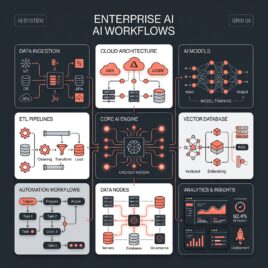
Enterprise-grade AI workflows are comprised of several key components, including Automation Triggers and Conditions, Orchestration Engines, Intelligent Decision-Making Layers, Seamless Integrations, and Context Engineering that enable the creation of adaptive and self-optimizing workflows.
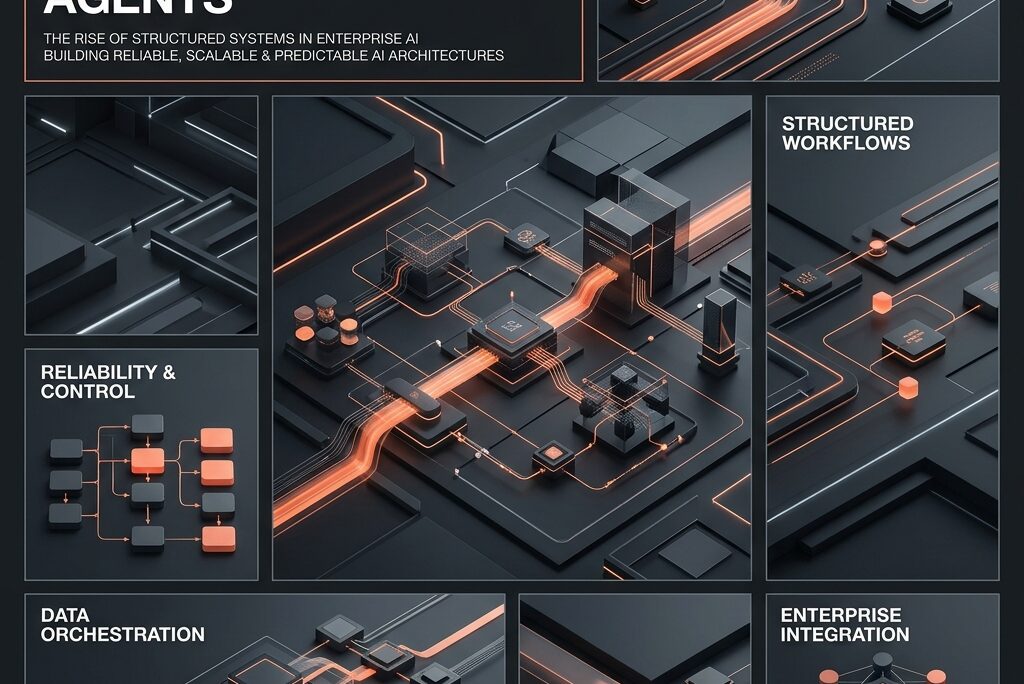
Beyond Autonomous Agents: Why Context Engineering Matters
Context engineering plays a critical role in elevating automation by creating rich, multi-faceted data layers—historical performance, external variables, and user preferences—that transform workflows into adaptive systems that drive business success.