
Read summarized version with


Revolutionizing Web App Development with AI-First Strategies
Key Takeaways:
- AI-first development revolutionizes web app creation by placing artificial intelligence at the core of the architecture.
- AI-native architectures integrate intelligence into every layer of the web app stack, from data pipelines to user interfaces.
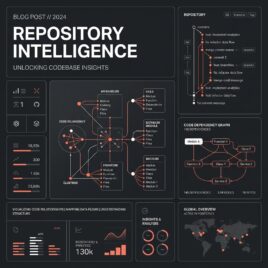
- Codebase intelligence refers to AI systems that enhance the entire software delivery lifecycle, from scoping to maintenance.
- AI-first web apps yield significant advantages, including accelerated development timelines, cost reductions, and superior user experiences.
Quick Answer: AI-first development empowers AI to drive design, coding, and optimization, resulting in faster launches and scalable systems, leveraging AI-first web development strategies.
Introduction to AI-First Development
AI-first development revolutionizes web app creation by placing artificial intelligence at the core of the architecture, rather than as an add-on feature. This approach designs applications from the ground up to leverage machine learning pipelines, neural networks, and inference engines, enabling real-time adaptation and intelligent decision-making.
Defining AI-Native Architectures
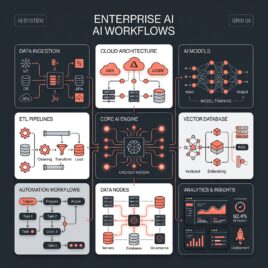
AI-native architectures integrate intelligence into every layer of the web app stack, from data pipelines to user interfaces. Traditional apps use relational databases and sequential processing, but AI-first systems employ vector databases for semantic search, neural embeddings for contextual understanding, and hybrid storage solutions.
The Role of Codebase Intelligence
Codebase intelligence refers to AI systems that enhance the entire software delivery lifecycle, from scoping to maintenance. In AI-first software engineering, tools like coding assistants evolve into collaborative agents that automate basics while humans supervise complex adjustments, boosting productivity by up to 80% in some cases.
Key Differences from Traditional Development
Traditional web development relies on manual coding, fixed schemas, and template-based structures, often leading to repetitive tasks and slow iterations. AI-first approaches automate these, using AI to lead layout generation, code creation, and personalization from initial requirements like industry type and branding.
Benefits of AI-First Web Apps
Building with AI-native architectures yields significant advantages, including accelerated development timelines, cost reductions, and superior user experiences. Businesses input basic specs, and AI generates full structures, slashing time from months to days.
Implementing AI-Native Architectures
To build AI-first web apps, start with foundational principles: select tools like vector stores and ML frameworks, design for scale with hybrid data handling, and embed AI from scoping. Input requirements into AI platforms for initial prototypes, then iterate collaboratively with agents.
Challenges and Best Practices
While powerful, AI-first development demands rethinking infrastructure for continuous learning and real-time inference. Challenges include ensuring model reliability, managing data privacy, and upskilling teams for AI supervision.
Future of AI-First Web Development
As hardware advances and AI integrates at platform levels, AI-first will dominate, shifting from feature additions to foundational intelligence. Web apps will become proactive partners, evolving with minimal intervention and delivering hyper-personalized experiences.
Quick Links
- Repository Intelligence: AI That Understands Code Context and Relationships
- AI Workflows for Developers: Outperforming Agents in Enterprise Coding and Automation
- Agentic AI for Developers: Autonomous Agents Revolutionizing Code Workflows and Multi-Agent Orchestration
- AI Coding Agents: Revolutionizing Software Development in 2026
FAQ
- Q: What is AI-first development? A: AI-first development places artificial intelligence at the core of the architecture, rather than as an add-on feature.
- Q: What are AI-native architectures? A: AI-native architectures integrate intelligence into every layer of the web app stack, from data pipelines to user interfaces.
- Q: What is codebase intelligence? A: Codebase intelligence refers to AI systems that enhance the entire software delivery lifecycle, from scoping to maintenance.
- Q: What are the benefits of AI-first web apps? A: Building with AI-native architectures yields significant advantages, including accelerated development timelines, cost reductions, and superior user experiences.